
Sub-Total: $0.00
Lavender and Sleep: What Does the Latest Research Actually Say?
Some evenings end before the mind receives the message. The lights are low, yet tomorrow’s plans still circle. That moment explains the appeal of lavender essential oil for sleep as a gentle bedtime cue. Its familiar floral aroma can make winding down feel intentional, simple, and pleasantly unhurried.
Lavender carries more research than many aromatic traditions. Recent findings are encouraging, although they do not settle every question. The best story is neither miracle nor myth. Instead, lavender may become one supportive element within a thoughtful evening routine.
Key Takeaways
- Recent trials suggest lavender aroma may improve reported sleep quality for some adults.
- The evidence remains limited, so lavender should not be presented as an insomnia treatment.
- A modest, consistent inhalation routine offers the most practical place to begin.
Why Lavender Belongs in the Bedtime Conversation
Lavender has long been associated with bathing, fragrance, and quiet domestic rituals. True lavender, Lavandula angustifolia, produces a soft floral aroma with fresh herbal edges. That balanced profile often feels gentler than sharper mint, eucalyptus, or citrus aromas.
Aroma changes a room without adding another complicated task. A diffuser can operate while you wash up, dim lights, or read. Consequently, lavender fits naturally beside other calming habits instead of competing with them.
Pearls of Nature’s Bulgarian Lavender Essential Oil is steam distilled from Bulgarian Lavandula angustifolia blossoms. Its floral, herbaceous character suits evening diffusion without requiring an elaborate blend. The product is intended for external aromatic or properly diluted topical use, never ingestion.

What the Latest Lavender Sleep Research Found
A 2026 systematic review and meta-analysis of lavender and sleep gathered 11 randomized trials involving 628 adults. Across those studies, lavender interventions improved sleep-quality measures by a statistically significant, moderate amount. The pooled standardized mean difference was −0.56, with a 95% confidence interval from −0.96 to −0.17.
Those numbers sound precise, but their everyday meaning needs context. Participants receiving lavender generally reported better sleep outcomes than comparison groups. Still, one pooled result cannot predict what any particular person will experience tonight.
The authors emphasized the limited quantity and quality of available trials. Study methods differed, including application method, concentration, placement, duration, and sleep measurement. Therefore, the review supports cautious optimism rather than a guaranteed result.
That balance agrees with the NCCIH overview of lavender research and safety. NCCIH says aromatherapy benefits for sleep quality or insomnia remain unclear overall. Together, these sources suggest a promising signal that still needs stronger confirmation..
Does Inhaling Lavender Essential Oil Really Help Sleep?
The honest answer is “possibly, for some people.” Most relevant studies examined inhalation rather than ingestion. That route matches how essential oils are commonly enjoyed at home.
Many trials relied on self-reported sleep questionnaires. Those reports matter because sleep quality includes how rested and settled a person feels. However, subjective improvements do not always equal changes measured through overnight laboratory equipment.
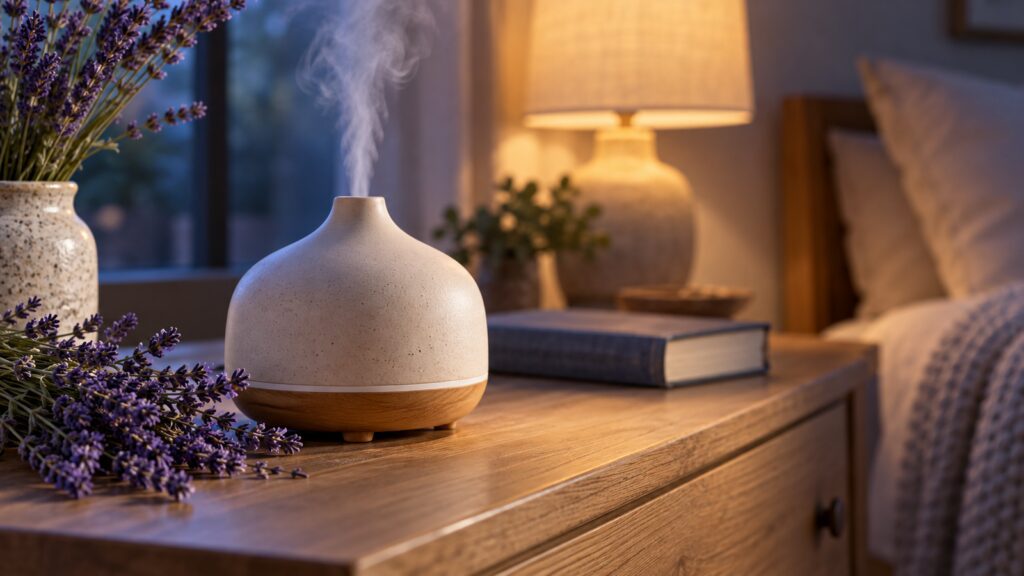
Lavender’s value may include the ritual surrounding it. A familiar aroma can mark the transition away from screens, work, and household activity. Research has not proven that this cue works identically for everyone, but the routine remains practical.
What the Research Does Not Establish
Current evidence does not establish lavender as a treatment for insomnia or another sleep disorder. It does not show that stronger aromas create better results. More oil may simply make a room uncomfortable.
The studies did not test the Pearls of Nature product specifically. Therefore, their findings should not be transferred directly onto one bottle. They describe research on lavender interventions, not a promise attached to every lavender oil.
These limitations do not make the routine pointless. They simply shift the goal toward a pleasant, repeatable wind-down experience. That is a realistic role for aroma, especially when expectations remain modest.
How to Use Lavender Essential Oil for Sleep Thoughtfully
Start with the diffuser manufacturer’s instructions. Add only the recommended amount, then run the device during your wind-down period. A subtle aroma is enough; the room should not feel saturated.
You might begin diffusion while preparing for bed, then stop before sleeping. This approach lets you notice whether the aroma feels pleasant and comfortable. This avoids treating all-night exposure as automatically preferable.
Keep the routine simple for several evenings. Dim the lights, set aside screens, and pair lavender with a quiet activity. Consistency makes it easier to judge whether the ritual fits your preferences.
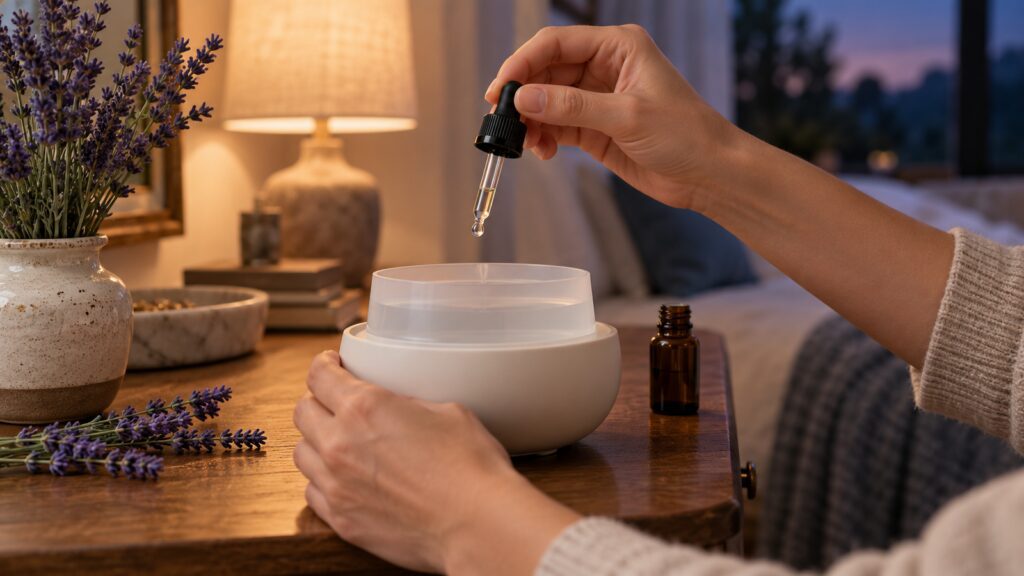
For readers considering lavender essential oil for sleep, personal comfort matters more than chasing intensity. A quiet, repeatable ritual offers a better test than one heavily scented evening.
A Simple Lavender Oil Bedtime Routine
Choose one repeatable starting time, perhaps 30 minutes before bed. Prepare the diffuser, lower the room’s stimulation, and let the aroma remain gentle. Then read, stretch comfortably, or prepare tomorrow’s essentials.
Avoid changing several habits at once when testing the routine. Otherwise, you may not know which change shaped your experience. A short note about comfort and morning impressions can reveal useful patterns.
Healthy sleep habits still carry the larger load. Regular timing, a comfortable room, and reduced evening stimulation remain foundational. Lavender can complement those choices, but it should not replace them.
Safe Inhalation Deserves the Same Care as Pleasant Aroma
Lavender aromatherapy is considered possibly safe for many adults, yet headaches or coughing can occur. Stop using it if the aroma causes discomfort. Fresh air and a lower amount may make future use more comfortable.
Use extra care around children, pets, pregnancy, nursing, medicines, or ongoing medical care. Product directions should guide your use, while qualified advice can address individual concerns. Never ingest this essential oil or place undiluted drops inside the nose.
Topical use requires a separate safety decision. If you want a body or massage blend, review essential oil dilution and carrier oils first. Inhalation directions should never become a topical recipe.
Choosing a Lavender Oil for an Evening Routine
Look for the botanical name, origin, and extraction method. These details help distinguish true lavender from products labeled only with a fragrance name. Clear safety directions signal that the seller expects careful use.
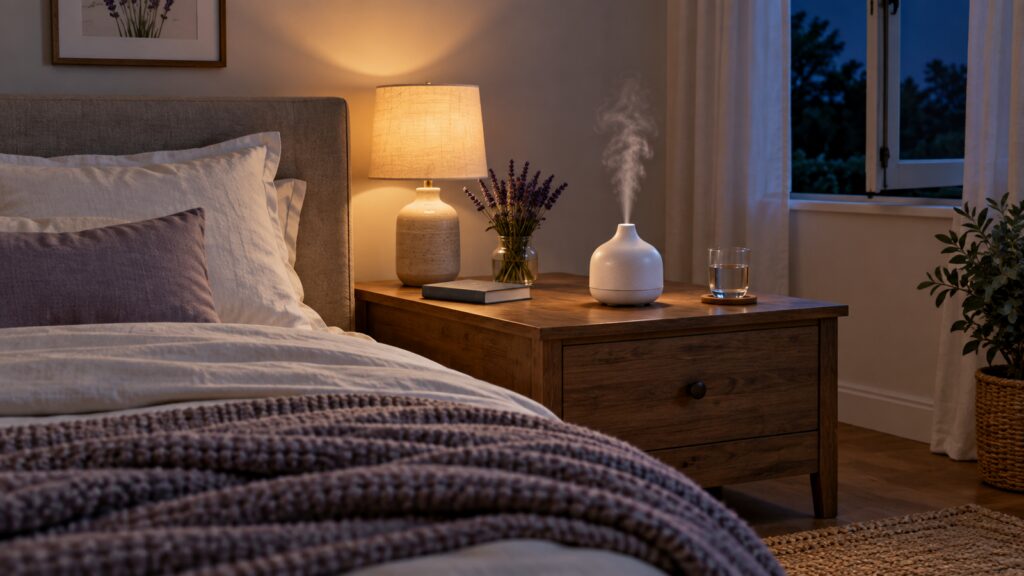
Choosing lavender essential oil for sleep means choosing an aroma you genuinely enjoy. Even promising research cannot make an unpleasant scent feel restful.
The Pearls of Nature essential-oil collection identifies each oil and offers practical usage guidance. Bulgarian Lavender Essential Oil lists Lavandula angustifolia, Bulgaria, and steam distillation. Its aroma combines soft floral character with fresh herbal notes.
That profile can stand alone, which keeps bedtime experimentation uncomplicated. Later, experienced users may enjoy complementary aromas, but simplicity reveals lavender’s character first. One thoughtfully chosen oil is enough for a complete ritual.
The Pearls of Nature Education library offers related guidance for thoughtful botanical routines. It can help you keep future experiments informed and uncomplicated.
When a Bedtime Concern Needs More Than Aroma
Persistent sleep difficulty deserves attention beyond essential oils. Loud snoring, gasping, severe daytime sleepiness, or continuing insomnia warrant professional guidance. Lavender should never delay an appropriate conversation with a qualified clinician.
Likewise, aromatherapy cannot correct an uncomfortable room or an unpredictable schedule. Begin with the parts of evening life you can control. Then let lavender provide atmosphere rather than carry the entire responsibility.
A Calm Conclusion, Supported by Realistic Evidence
Research gives lavender a credible place in the bedtime conversation, but not the final word. Eleven randomized trials offer an encouraging signal, while study limitations protect us from overstatement. That combination supports curiosity with sensible expectations.
For those who enjoy botanical aromas, lavender can make evening feel more deliberate. Pearls of Nature offers a pure Bulgarian option with clear identity and a balanced floral-herbal profile. A few careful steps can turn that aroma into a welcoming nightly cue.
If this routine fits your needs, begin gently and notice your own experience. Keep the surrounding sleep habits steady, and let the aroma remain supportive. Natural care can be simple, enjoyable, and honest about what science still needs to learn.
Disclaimer: This article provides general education and does not replace professional medical advice, diagnosis, or treatment.
