
Sub-Total: $0.00
Skinimalism in 2026: How to Build a Simple Oil-Based Skincare Routine
A crowded bathroom shelf can make skincare feel like another unfinished task. A minimalist skincare routine takes the opposite approach: fewer steps, clearer purposes, and products you enjoy using. In 2026, that practical simplicity feels especially timely.
Key Takeaways
- Skinimalism means choosing purposeful steps, not abandoning everything except facial oil.
- Water-based hydration and plant oils do different jobs, so a simple routine may need both.
- Sunscreen remains a separate daytime step because facial oils do not provide dependable UV protection.
Why Skinimalism Feels Right in 2026
Skinimalism is less about chasing a tiny product count and more about removing needless complexity. A 2026 Beth Israel Lahey Health review of current skincare trends describes skinimalism as a return to fewer, more purposeful products. The idea favors simpler routines instead of automatically adding another layer for every concern.
The approach also fits established dermatology guidance surprisingly well. A practical routine still needs to cleanse, moisturize when needed, and provide reliable daytime sun protection. Simplicity works because skin still has basic needs, even when your shelf gets smaller.
Cleansing removes buildup, while hydration concerns the skin’s water content. Emollients soften the surface, and occlusive ingredients can help slow water loss. Sun protection has another job entirely.
That distinction keeps skinimalism useful instead of turning it into another rigid beauty rule. You can simplify around what your skin needs today. You can also keep dermatologist-directed treatments when they serve a real purpose.
How a Minimalist Skincare Routine Gives Every Step a Job
The easiest way to simplify is to ask what function each product performs. If two products do essentially the same job, one may be enough. This framework keeps the routine flexible.
| Function | What it contributes | Simple example |
|---|---|---|
| Cleanse | Removes makeup, sunscreen, excess oil, and buildup | Gentle cleanser or cleansing oil |
| Hydrate | Supports water content in outer skin | Water-based moisturizer, gel, or lotion |
| Soften and seal | Improves softness and helps reduce moisture loss | Facial oil or emollient moisturizer |
| Protect | Reduces ultraviolet exposure when used as directed | Broad-spectrum sunscreen |
A facial oil can support softness and moisture retention, yet it does not literally add water to skin. Likewise, a hydrating gel cannot replace sunscreen. A recent review of skin hydration and moisturizing cosmetics explains the separate roles of humectants, emollients, and occlusives.
Skinimalism works best when each step keeps its own job.
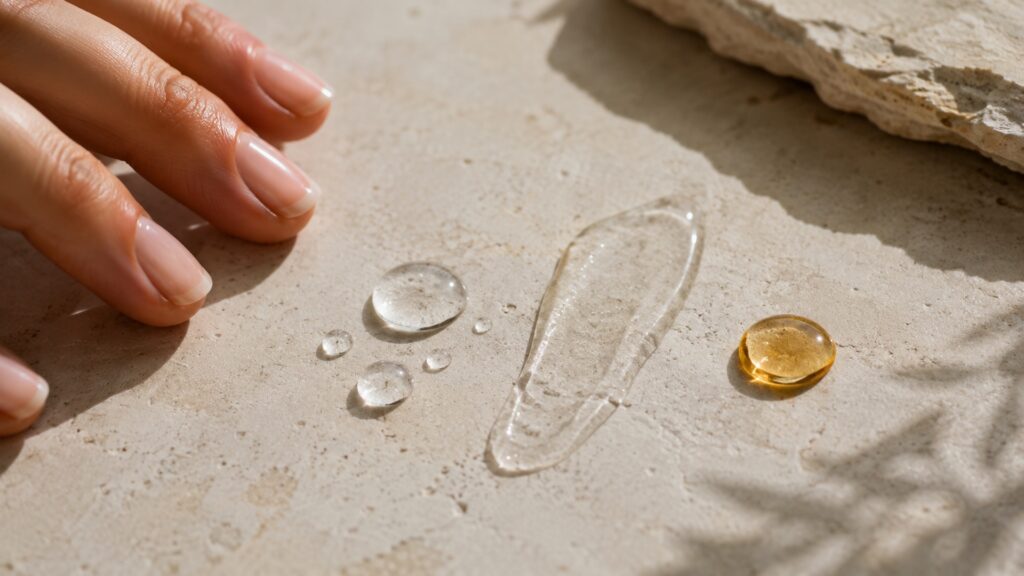
Step 1: Cleanse Without Turning Cleansing Into a Project
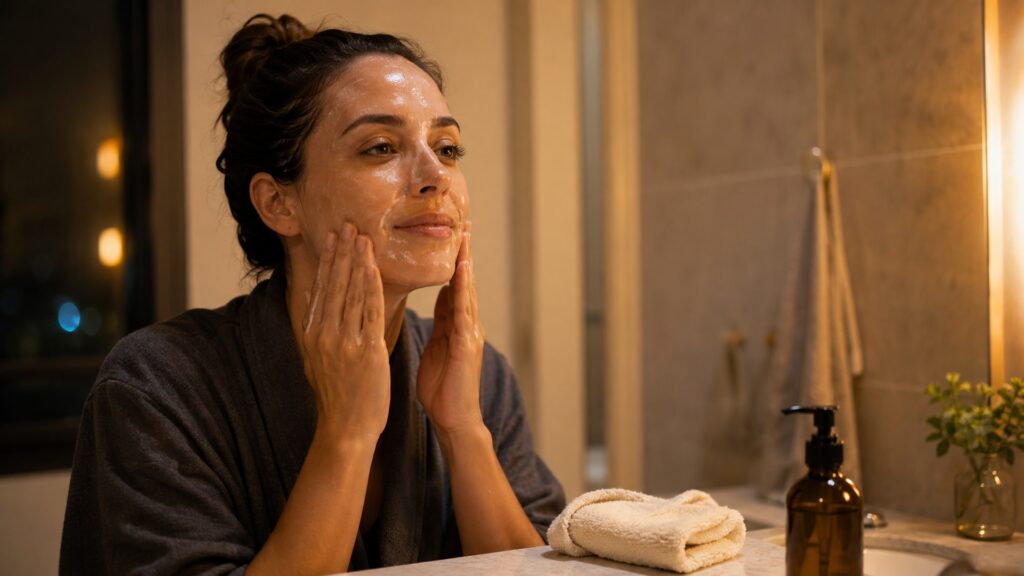
Even a short routine needs a reliable way to remove sunscreen, makeup, excess oil, and daily buildup. Pearls of Nature Oil Cleansing Complex offers one oil-based approach for evening cleansing. Its plant-oil blend provides generous slip, while aromatic essential oils create a soft botanical character.
Massage a small amount over dry skin for 30 to 60 seconds. Then remove it thoroughly with a warm, damp cloth. The product is designed as a rinse-off cleanser rather than an overnight facial oil.
Avoid direct eye contact and patch test if its botanicals are new to you. Those simple habits keep the experience comfortable without making cleansing complicated.
Pearls of Nature also explores the background in The History of the Oil Cleansing Method. The history is interesting, but the modern value is wonderfully practical: one comfortable step can remove the day.
Step 2: Add Water Before You Seal It In
This is where oil-based routines often become confusing. Skin hydration refers to water within the outer skin layers. The 2026 review of skin hydration describes humectants, emollients, and occlusives as different tools within moisturizing skincare.
Plant oils belong mainly on the emollient side of that picture. They can leave skin feeling smoother, softer, and more comfortable. However, they should not be described as adding water to skin.
For many people, the simplest answer is pairing a water-based step with facial oil. Apply your usual hydrating lotion, gel, or moisturizer first. Then press a small amount of oil over slightly damp skin when that finish feels comfortable.
You do not necessarily need several serums between those steps. If one well-tolerated hydrating product already gives your skin the feel you want, skinimalism gives you permission to stop there.
Step 3: Choose One Facial Oil by Feel, Not Hype
A minimalist skincare routine becomes easier when one facial oil earns a clear role. Texture matters because an oil you dislike wearing will eventually gather dust. Start with the finish you prefer, then adjust for season or dryness.
Pearls of Nature Olive Squalane Oil is perhaps the simplest starting point. It contains one ingredient, olive-derived squalane, with a clear, fragrance-free, silky finish. Its lightweight texture makes one to three drops easy to spread.
For a more traditionally botanical character, Virgin Organic Baobab Oil feels somewhat richer while remaining relatively light. It is cold-pressed from Adansonia digitata seeds and has a naturally golden appearance.
Virgin Organic Pomegranate Seed Oil offers a more concentrated, distinctive botanical experience. Because of its richer feel, a very small amount may be all you want in a minimalist routine.
Virgin Organic Tamanu Oil brings the richest personality of the group. Its green-gold color and earthy aroma make it especially distinctive, so it suits readers who enjoy a more substantial evening oil.
Pearls of Nature brings all four together in its Plant Oils collection. That makes it easier to compare texture, botanical source, and suggested use without treating one oil as universally superior.
Readers who want more ingredient-level background can also explore The Link Between Essential Fatty Acids and Ceramide Synthesis in Skin. That article looks more closely at essential fatty acids, skin lipids, and selected plant oils.
The useful lesson is not that one oil wins. Texture, simplicity, and your own preferences should guide the choice.
| Oil | Character | Simple-routine role |
|---|---|---|
| Olive Squalane | Clear, silky, fragrance-free | Lightweight everyday finishing oil |
| Baobab | Silky, slightly richer | Botanical option for drier-feeling skin |
| Pomegranate Seed | Richer and concentrated | Small-amount finishing oil |
| Tamanu | Rich, green, earthy | Distinctive botanical or evening option |
Start with the lightest option that gives the finish you enjoy. If skin still feels tight, revisit hydration before simply adding more oil.
Patch test each new botanical oil before wider use. Use extra care with unfamiliar seed or nut-derived oils if you have relevant sensitivities.

Morning and Evening Do Not Need to Match
A simple morning routine may be shorter than your evening routine. Follow your usual gentle cleansing method, add moisturizer when needed, then finish with sunscreen. Facial oils are not substitutes for that protection.
The American Academy of Dermatology sunscreen guidance recommends choosing a broad-spectrum, water-resistant sunscreen with SPF 30 or higher.
Application matters too. The AAD advises applying sunscreen before outdoor exposure and explains that sunscreen should be reapplied as appropriate during the day. Its sunscreen application guidance provides the practical details.
If morning facial oil makes sunscreen feel slippery or encourages you to apply less sunscreen, reserve the oil for evening. Skinimalism should make important steps easier, not compete with them.
An evening routine can stay pleasantly compact. Cleanse thoroughly, add a water-based hydration step when desired, then finish with a few drops of oil. That sequence gives each product a clear reason to be there.
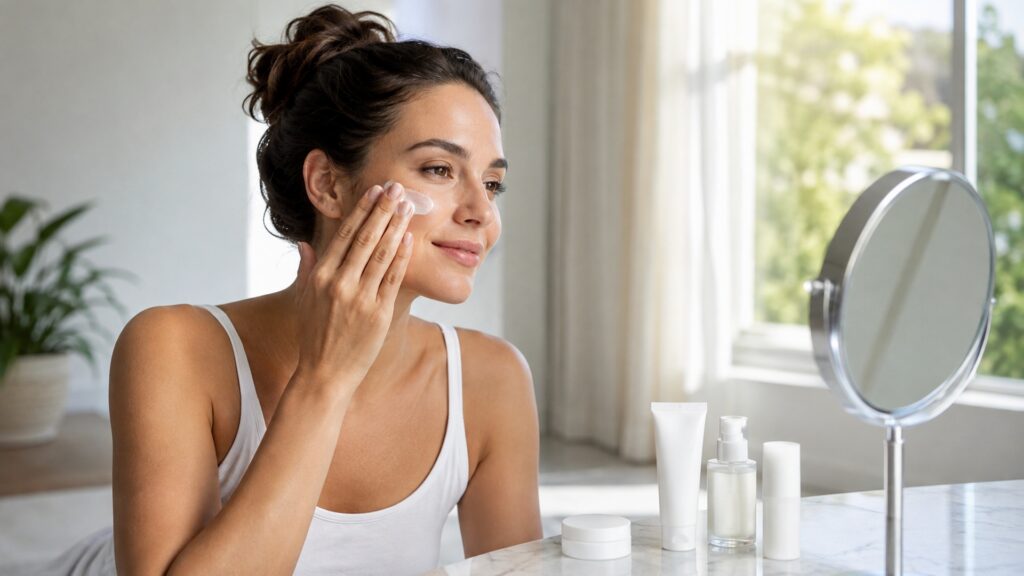
What Skinimalism Should Not Remove
Skinimalism should never become pressure to abandon prescribed treatments or products that solve a genuine problem. A dermatologist-directed treatment plan has a different purpose. Keep those recommendations unless your qualified clinician changes them.
The same principle applies to sunscreen. Removing unnecessary layers can make a routine calmer, but sun protection is not decorative. It remains a distinct daytime function.
If persistent burning, itching, cracking, or unusual redness continues, seek qualified professional guidance. A cosmetic routine should not be expected to diagnose or manage a medical condition.
Common Mistakes That Make a Simple Routine Harder
A minimalist routine can become complicated again surprisingly quickly.
- Buying several facial oils before learning which texture you actually enjoy.
- Applying more oil when the missing step is water-based hydration.
- Treating every new trend as a required addition.
- Using facial oil instead of a properly labeled sunscreen.
The better question is, “What job does this step perform?” If the answer is unclear, the product may not need a permanent place.
A Three-Step Pearls of Nature Evening Routine
For an oil-centered evening, the structure can stay simple. First, cleanse with Oil Cleansing Complex and remove it completely with a warm, damp cloth.
Second, apply the water-based hydrating product that already suits your skin. This is the step that contributes water-based hydration rather than simply adding another oil.
Third, finish with one to three drops of your selected plant oil. Olive Squalane Oil keeps the finish light, while Baobab Oil offers more botanical richness.
Pomegranate Seed Oil gives the routine another rich botanical option, while Tamanu Oil brings a distinctive green-gold color and earthy sensory character.
This minimalist skincare routine leaves room for personal preference without turning skincare into a collection hobby. Pearls of Nature’s Skin Care collection covers the cleansing side, while the Plant Oils collection lets you choose the finishing texture that feels most natural to you.
Simple Can Still Feel Luxurious
Skinimalism replaces clutter with intention. A good minimalist skincare routine still cleanses, supports hydration, softens the skin, and protects it during daytime. It simply asks fewer products to do those jobs clearly.
Oil-based skincare becomes easier when you understand what oils can realistically contribute. They offer glide, emollience, softness, and a satisfying finishing ritual. They work best beside hydration and sunscreen, not in place of them.
If this approach fits your skin and preferences, begin with the products you already use successfully. Then simplify one decision at a time. A thoughtful routine can feel both beautifully minimal and completely your own.
Disclaimer: This content is intended for educational purposes and not as a substitute for professional medical advice.
