
Sub-Total: $0.00
Baobab Oil: The African Botanical Behind a Modern Beauty Resurgence
Sometimes the most interesting beauty ingredients have the longest stories. That is certainly true of baobab oil for skin, an African botanical gaining fresh attention in modern skincare. Yet its appeal begins far beyond the beauty counter, with a remarkable tree and the communities that have long valued it.
Today, baobab appears in facial oils, body treatments, and hair-care products. Its growing popularity raises a worthwhile question: what makes this golden seed oil special, and how might it fit into everyday care?
Key Takeaways
- Baobab comes from a culturally significant African tree, not a newly discovered beauty ingredient.
- Its fatty-acid composition makes it a versatile cosmetic emollient for skin and hair.
- A few drops can add softness, comfortable glide, and a beautifully simple finishing touch.
From an African Landscape to a Modern Skincare Shelf
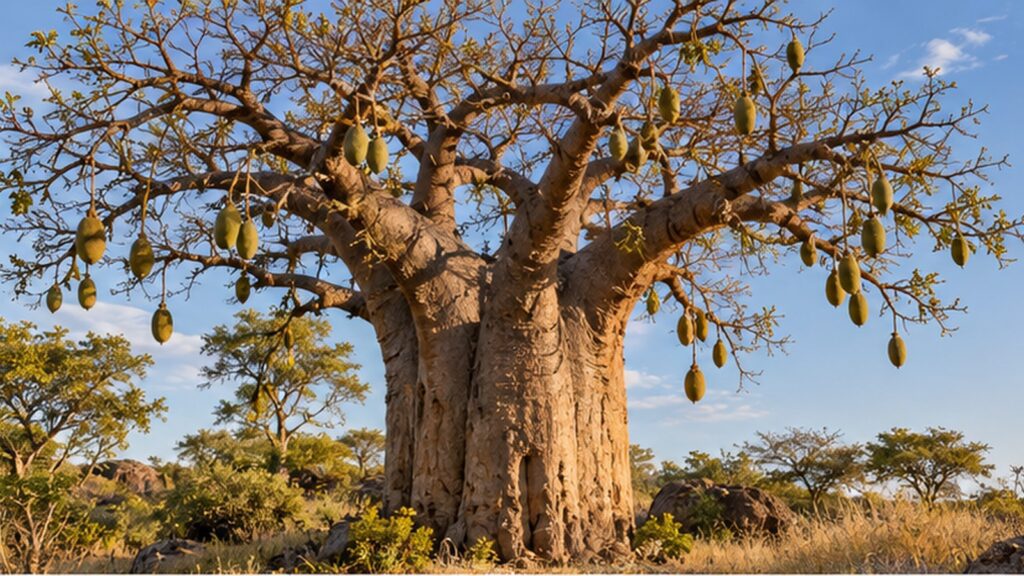
Imagine a broad African landscape, with a baobab tree rising above the surrounding vegetation. Its enormous trunk and distinctive branches make it instantly recognizable. For generations, these trees have provided food, useful materials, gathering places, and cultural meaning.
The African baobab, Adansonia digitata, grows across much of tropical and southern Africa. According to Royal Botanic Gardens, Kew, its fruit, seeds, leaves, bark, and other parts have longstanding local uses. The tree’s significance reaches well beyond any single cosmetic ingredient.
That history deserves recognition. Baobab did not suddenly become valuable when international beauty brands began celebrating it. Instead, today’s growing interest offers another opportunity to appreciate knowledge and resources already familiar across African communities.
What Exactly Is Baobab Oil?
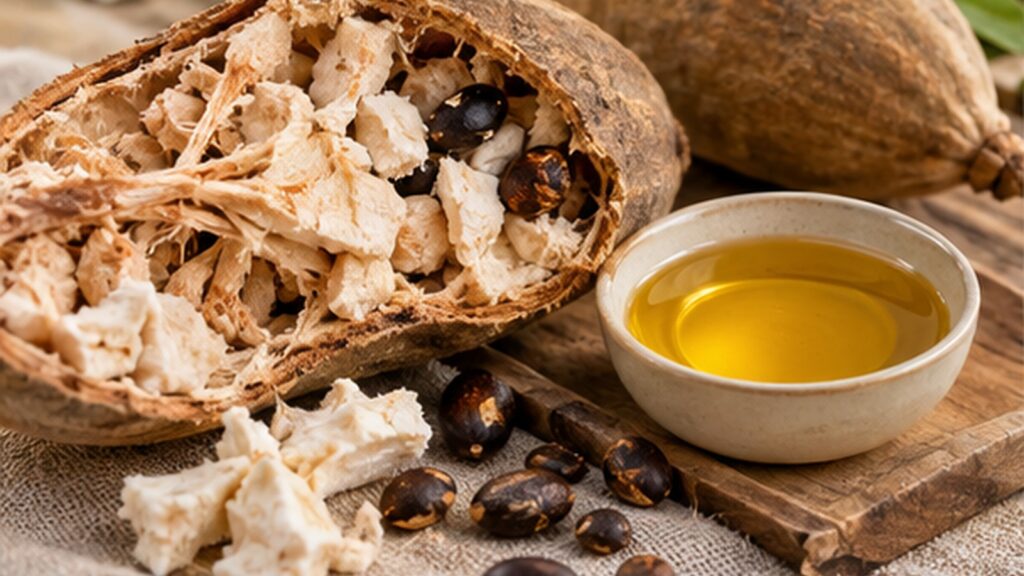
The familiar baobab fruit contains a dry, pale pulp surrounding numerous seeds. Cosmetic baobab oil comes from those seeds rather than the fruit pulp. The oil is commonly identified on ingredient labels as Adansonia Digitata Seed Oil.
Cold pressing extracts oil through mechanical pressure without relying on conventional solvent extraction. Depending on processing and natural variation, the finished oil may have a golden appearance and a characteristic botanical scent. Its texture provides the glide and conditioning feel associated with many plant oils.
This distinction matters when shopping. Baobab fruit powder and baobab seed oil come from the same tree, but serve different purposes. Fruit-pulp nutrition claims should not be transferred to a topical seed oil.
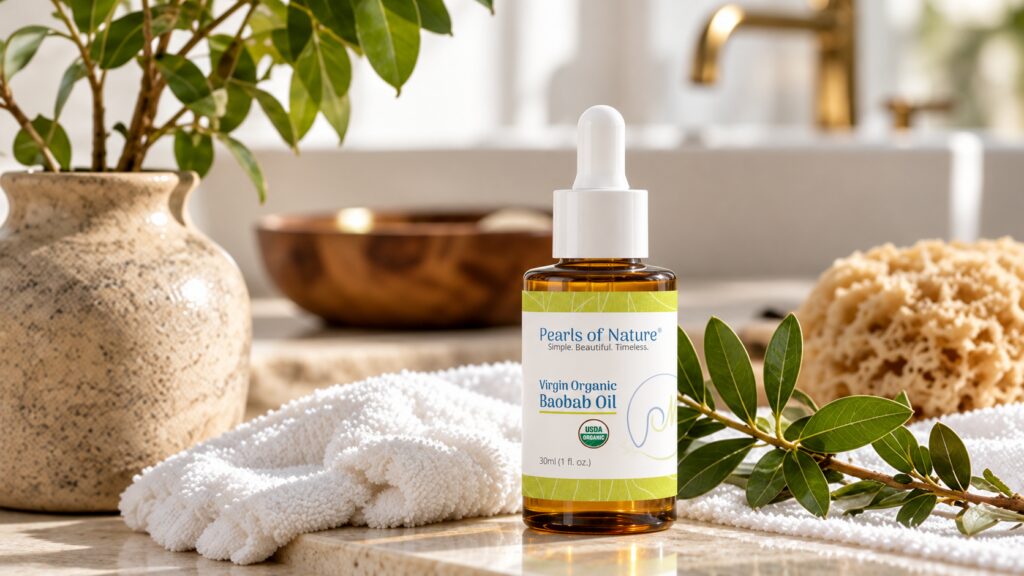
For a straightforward example, Pearls of Nature Virgin Organic Baobab Oil contains one ingredient: cold-pressed virgin organic baobab seed oil. Its simplicity lets you experience the oil’s own texture without a complex blend.
Why Is Baobab Oil for Skin So Interesting?
A plant oil’s character comes partly from its mixture of fatty acids. Baobab contains several familiar components, particularly oleic, linoleic, and palmitic acids. Together, these help explain its appeal as a conditioning ingredient.
Oleic acid is a monounsaturated fatty acid found in many botanical oils. Linoleic acid is polyunsaturated, while palmitic acid is saturated. Their relative proportions influence formulation characteristics, although the experience also depends on processing and the complete product.
A 2019 study of African baobab populations found meaningful differences between seed-oil samples. The researchers also identified oleic, palmitic, and linoleic acids as prominent components. Consequently, no single laboratory profile describes every harvest perfectly.
The important lesson is practical. Fatty-acid names offer useful clues, but they cannot promise a particular result on your skin. Ultimately, texture, comfort, application amount, and personal preference matter just as much.
For readers interested in the broader science, explore our guide to essential fatty acids and ceramides in skin. It provides additional context for understanding lipids and moisture retention.
What Benefits Can You Realistically Expect?
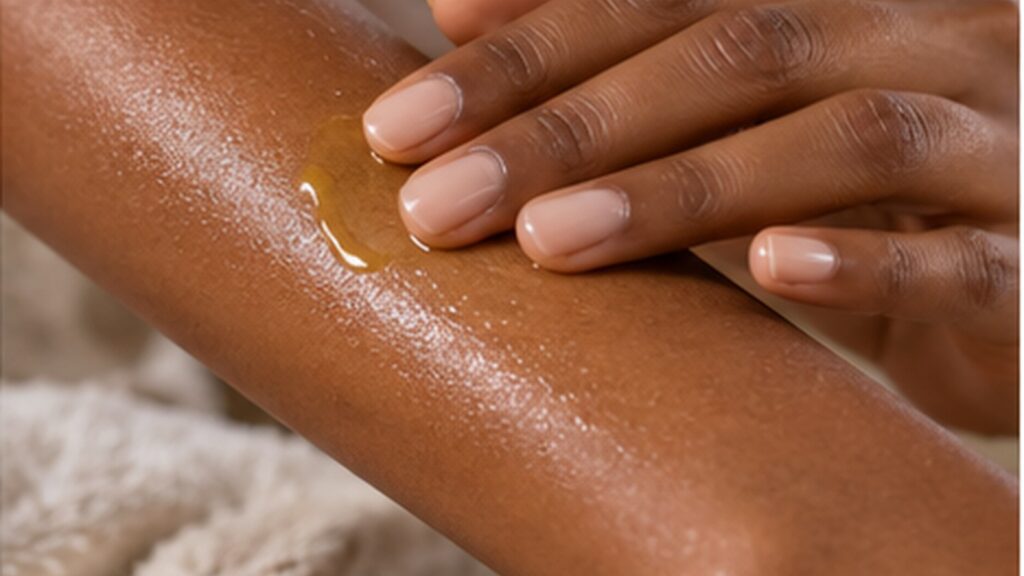
Picture applying a little oil after cleansing, while your skin still feels slightly damp. Your fingertips glide easily, and dry-looking areas gain a smoother, softer finish. That simple sensory experience is central to baobab’s cosmetic appeal.
There is also some preliminary research supporting its moisturizing potential. A small pilot study involving 20 adult women examined topical baobab seed oil. Researchers observed favorable moisture measurements, including reduced water loss under the study conditions.
However, this was a small investigation, not proof of dramatic or permanent skin changes. Its findings support more modest expectations around moisturization and surface conditioning. They do not establish wrinkle reversal, collagen stimulation, or identical results across commercial products.
For everyday users, that perspective is useful rather than disappointing. A pleasant botanical oil does not need extraordinary promises to earn its place. Sometimes a comfortable application and a softer appearance are exactly what a routine needs.
Can Baobab Oil Be Used on the Face and Hair?
Baobab oil offers more versatility than its growing facial-skincare reputation might suggest. Depending on your preferences, you can apply a small amount to facial skin, body areas, or dry-looking hair ends. The key is using enough to condition without overwhelming the surface.
For facial care, begin with one or two drops over clean, slightly damp skin. Gently press or spread the oil, then assess the finish. If your skin prefers a lighter result, reduce the amount or reserve it for evening use.
On hair, concentrate on the lengths and ends rather than automatically coating the roots. Rub a tiny amount between your palms before smoothing flyaways or rough-feeling ends. Fine hair may need particularly little, while thicker hair may tolerate more.
A botanical oil can improve shine and manageability without changing how hair grows. Its purpose here is grooming and conditioning, not treating scalp disorders. That makes baobab a practical companion to a simple, comfortable hair-care routine.
For more guidance on carrier-oil selection, see our rosemary hair and scalp-care guide. It explains why the carrier matters when creating an appropriately diluted aromatic blend.
Why Is African Baobab Receiving Renewed Attention?
The renewed interest in baobab reflects a larger conversation about botanical ingredients and their origins. Consumers increasingly want to understand what goes into their skincare. They also want products with recognizable ingredients and meaningful stories.
The Global Wellness Institute’s 2026 trends report identifies growing recognition of African beauty traditions. Baobab appears alongside other longstanding botanical ingredients, including shea and marula. This is greater visibility, rather than the beginning of African botanical knowledge.
That recognition also brings responsibilities. Respectful appreciation includes acknowledging the people, traditions, harvesting communities, and supply chains behind these materials. Attractive marketing alone cannot establish ethical sourcing or fair compensation.
A thoughtful customer can enjoy baobab’s cosmetic qualities while remaining curious about those broader relationships. The ingredient’s beauty story becomes richer when its African origins remain central.
Pure Baobab Oil or a Finished Body Oil?
Choosing between a single botanical oil and a finished blend depends on your routine. Neither approach is inherently better. They simply offer different experiences.
Pure baobab oil gives you control over the amount and application. You can explore its natural feel alone or combine it with compatible products. This approach suits anyone who enjoys minimal ingredients and adaptable personal care.
A finished body oil can offer a more layered sensory experience. Pearls of Nature Satin Skin Body Oil combines baobab with camellia, meadowfoam, marula, squalane, and other emollients. Its essential-oil blend adds a bright, floral, and warmly grounded aroma.
For an uncomplicated facial ritual, the single oil makes a natural starting point. Meanwhile, the finished body oil suits an after-shower massage or evening routine. Both approaches celebrate botanical ingredients without requiring complicated steps.
How to Enjoy Baobab Oil in Your Routine
Start with freshly cleansed skin, preferably while a little moisture remains. Warm one or two drops between clean fingertips, then spread gently. Add more only when the area genuinely needs additional glide.
For body care, a few drops can finish a moisturizing routine on elbows or other dry-looking areas. On hair, begin with the smallest practical amount. Let the results guide your routine rather than applying more automatically.
Patch test before broader use, particularly with known seed or botanical sensitivities. Avoid eyes, irritated skin, and any ingredient linked to a previous reaction. If persistent discomfort develops, stop use and seek appropriate professional advice.
Finally, protect the oil’s freshness by closing its container tightly. Store it away from direct sunlight and excessive heat. A noticeable rancid odor signals that the product should no longer be used.
A Timeless Ingredient Worth Getting to Know
Baobab’s growing beauty-industry visibility is only the latest chapter in a much longer African story. Its appeal combines remarkable botanical heritage with practical qualities that fit comfortably into modern personal care. There is no need to exaggerate either.
If you enjoy simple botanical routines, baobab offers an inviting place to begin. Try a few drops, notice the texture, and discover what feels comfortable for you. Sometimes thoughtful skincare starts with understanding one beautiful ingredient a little better.
Disclaimer: This article provides general education and does not replace professional medical advice, diagnosis, or treatment.
