
Sub-Total: $0.00
Rosemary Essential Oil for Scalp and Hair Care: Safe Use and Realistic Expectations
Rosemary essential oil for hair has become one of today’s most visible natural-care trends. However, popularity does not replace careful use. Clear information helps you avoid irritation, confusing labels, and unrealistic expectations.
Rosemary Essential Oil for Hair: What It Actually Is
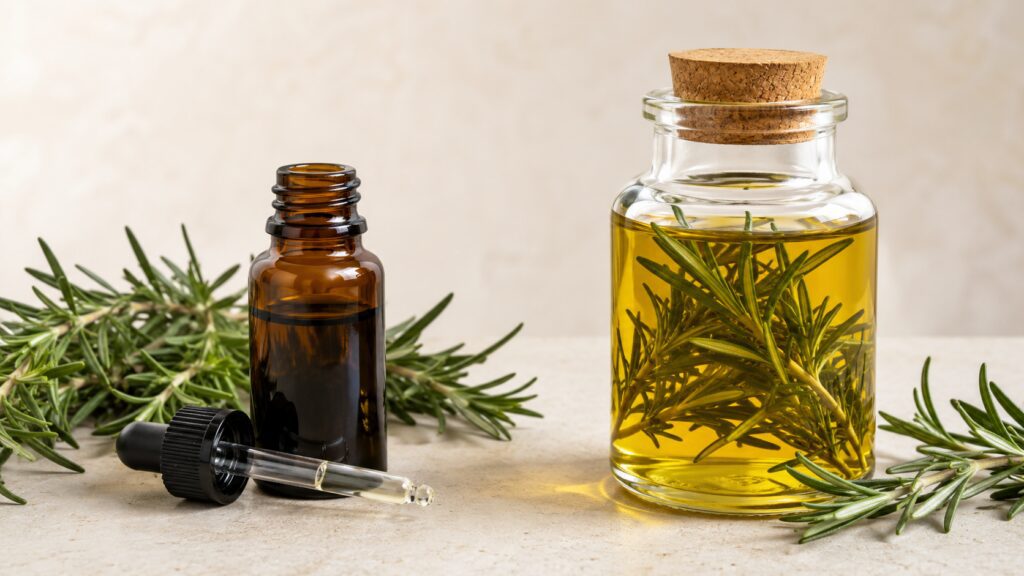
Rosemary essential oil comes from steam-distilled rosemary leaves and flowering tops. Therefore, it contains concentrated aromatic compounds in a very small volume.
Rosemary cineole oil has a crisp, herbaceous, camphoraceous aroma. Additionally, its scent creates a refreshing character within carefully diluted scalp blends.
Because essential oil is concentrated, you should not spread it directly across your scalp. Instead, blend it into a suitable carrier oil.
Pearls of Nature Rosemary Cineole Essential Oil suits custom aromatic formulas when properly diluted. Browse our collection of pure essential oils for carefully diluted topical blends. However, the product should not support guaranteed growth claims.
Rosemary Essential Oil Versus Rosemary-Infused Oil
People often use “rosemary oil” for two very different products. Therefore, always read the ingredient list before choosing one.
Rosemary essential oil comes from steam distillation. In contrast, rosemary-infused oil comes from soaking rosemary inside a liquid plant oil.
Meanwhile, a true essential oil may list Rosmarinus officinalis leaf oil. It may also identify the cineole chemotype or origin.
The table below highlights the practical differences.
| Feature | Rosemary essential oil | Rosemary-infused oil |
|---|---|---|
| Production | Steam distilled | Rosemary steeped in carrier oil |
| Concentration | Highly concentrated | Much milder |
| Main use | Small amounts in diluted blends | Direct use when directions allow |
| Texture | Thin and aromatic | Determined by the carrier oil |
| Label clue | Botanical essential oil name | Carrier oil appears first |
Because labels vary, never assume every “rosemary oil” needs the same recipe. Instead, follow the listed ingredients and directions.
Realistic Expectations for a Rosemary Scalp Oil
A diluted rosemary scalp oil can support a pleasant grooming ritual. Additionally, rosemary essential oil for hair requires careful measurement and realistic expectations.
However, rosemary essential oil does not guarantee regrowth, restored density, or faster growth. Personal factors can strongly influence hair appearance.
A commonly cited 2015 study followed 100 participants for six months. However, one study cannot establish universal results for every product.
The study also does not prove that any homemade blend matches its tested preparation. Therefore, avoid turning limited research into product promises.
Sudden or persistent hair changes deserve qualified professional attention. Cosmetic products should not replace an appropriate evaluation.
How to Dilute Rosemary Oil for Hair Safely
Learning how to dilute rosemary oil for hair protects your scalp from unnecessary exposure. Therefore, begin with a conservative leave-on concentration.
A 0.5% dilution offers a sensible starting point for many first-time users. Meanwhile, a 1% dilution suits standard occasional scalp massage.
Use a graduated pipette whenever possible. Because drop sizes vary, volume measurements provide better consistency.
Rosemary Essential Oil Dilution Table
| Finished blend | 0.5% dilution | 1% dilution |
|---|---|---|
| 10 milliliters | About 1 drop | About 2 drops |
| 30 milliliters | About 3 drops | About 6 drops |
| 50 milliliters | About 5 drops | About 10 drops |

First, choose the lowest practical dilution. Next, observe your scalp after each use.
Do not add extra drops because the aroma seems mild. Instead, follow the intended dilution and application frequency.
Additionally, label the bottle with ingredients, strength, and blending date. When using rosemary essential oil for hair, keep every formula clearly identified.
Choosing a Carrier for Rosemary Essential Oil for Hair
The carrier oil controls texture, spread, finish, and washability. Therefore, choose one that matches your hair density and routine.
Olive-derived squalane offers a light, silky feel. Additionally, it spreads easily without creating the heaviness of many traditional oils.
Consequently, Pearls of Nature Olive Squalane works well for targeted scalp application. It also suits dry-looking ends when used sparingly.
Virgin organic baobab oil provides a richer, more cushioning feel. Therefore, it may suit textured hair or dry-looking lengths.
For balance, combine equal parts olive squalane and baobab oil. This pairing offers lightweight spread with a richer finish.
Ultimately, choose carriers by texture, freshness, comfort, and washability. Explore more plant oils for hair and scalp care when selecting your blend.
How to Apply a Diluted Rosemary Scalp Oil
First, begin with a clean and comfortable scalp. Avoid scratched, irritated, or visibly damaged areas.
Next, divide your hair into several sections. Then, apply a few drops along each section.
Use your fingertips to spread the blend gently. However, avoid fingernails, aggressive rubbing, and excessive pressure.
Massage for two or three minutes. Because gentle movement provides enough slip, forceful rubbing adds no practical advantage.
For a pre-shampoo routine, leave the oil for 20 to 60 minutes. Afterward, shampoo according to your normal routine.
Begin with one weekly application. Subsequently, increase to twice weekly only when your scalp remains comfortable.
More frequent oiling does not guarantee better results. Moreover, excess oil can weigh down roots and complicate cleansing.
Patch Testing and Rosemary Oil Safety
Patch testing cannot predict every possible reaction. However, it may reveal obvious sensitivity before a broader application.
First, apply a small amount of the finished blend to your inner forearm. Then, wait 24 hours.
Stop using the blend if burning, swelling, rash, or persistent itching develops.
Keep the blend away from eyes, inner ears, and other sensitive areas. Moreover, wash your hands after each application.
Store essential oils away from children and pets. Likewise, keep every bottle tightly closed and clearly labeled.
Pregnancy, nursing, medication use, or ongoing scalp concerns may require professional guidance. Therefore, seek qualified advice before use.
Common Rosemary Hair Oil Mistakes
The first mistake involves applying undiluted essential oil. Consequently, the scalp receives unnecessary concentration without guaranteed benefits.
Another mistake involves confusing essential oil with infused oil. Therefore, inaccurate product identification can create an unsuitable recipe.
Essential oils also do not dissolve evenly in plain water. As a result, floating droplets may contact skin without dilution.
Similarly, adding essential oil directly to shampoo creates uneven distribution. A prepared carrier blend offers more predictable application.
Overnight oiling can also create unnecessary exposure. Instead, begin with a shorter pre-shampoo routine.
Finally, do not judge success only through growth claims. Consider comfort, softness, shine, manageability, and routine consistency.
A Simple Rosemary Scalp Oil Routine
Understanding how to dilute rosemary oil for hair makes your routine safer and easier to repeat. Begin with accurate identification and conservative dilution.
First, combine 30 milliliters of carrier oil with about three essential oil drops. This creates an approximate 0.5% blend.
Next, apply a few drops to sectioned areas before shampooing. Then, massage gently for two or three minutes.
Record your formula, frequency, and scalp response. Additionally, photograph your hair monthly under similar lighting when appearance tracking matters.
Rosemary essential oil for hair can complement a thoughtful grooming routine. However, responsible use matters more than trend-driven excess.
Therefore, dilute carefully, select suitable carriers, and keep every promise measured. A realistic routine supports confidence without exaggeration.
