
Sub-Total: $0.00
Why Shower Oils Are Becoming a Modern Body-Care Essential
Most showers end the same way. You rinse, towel off, remember moisturizer, and sometimes decide you are already done. Shower oil benefits begin with changing that sequence. Instead of waiting until skin feels dry, you add emollient oils while it remains damp. The routine feels simple, but the timing can make body care easier to enjoy consistently.
Key Takeaways
- Shower oil adds emollient oils while water still remains on the skin.
- Applying moisture during the shower can simplify a separate lotion step.
- Use a small amount, pat dry gently, and always watch for slippery surfaces.
What Does a Shower Oil Actually Do?
A shower oil is a body-care oil designed for use near the end of bathing. It is not simply another cleanser. Its main job is to leave the skin feeling softer, smoother, and more comfortable after rinsing.
That effect comes largely from emollients. Emollients help smooth the skin’s outer surface and improve its feel. A 2023 moisturization review explains how emollients support the outer skin layer.
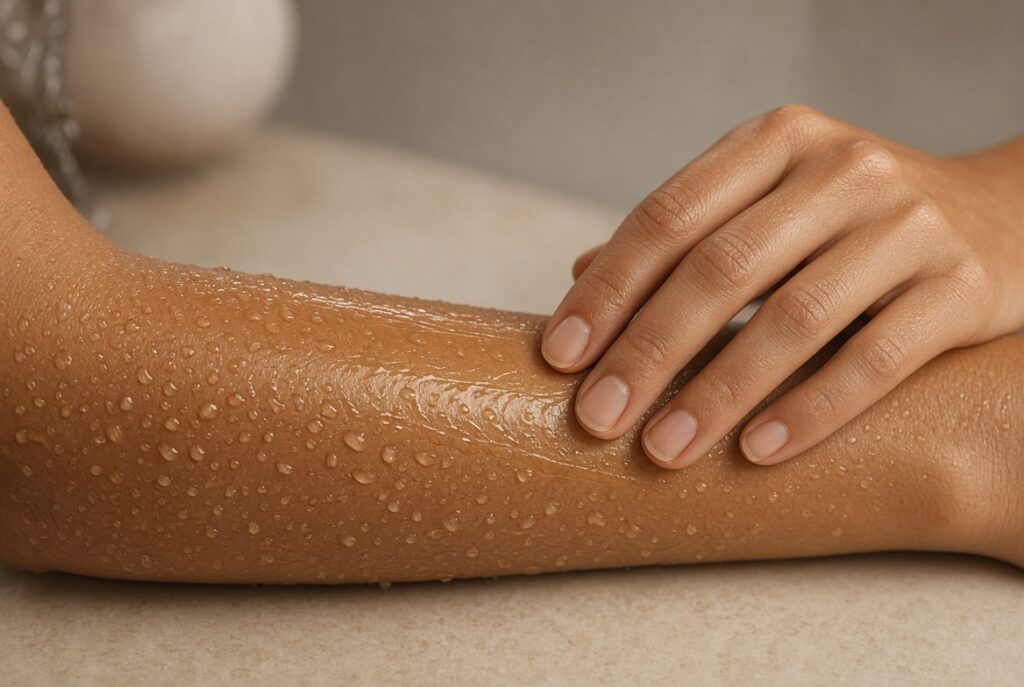
This matters because a shower briefly leaves water on the skin’s surface. Applying an oil during that window lets you spread a thin layer across damp skin. You are not forcing ingredients deep into the body. Instead, you are working with surface moisture before it disappears.
The American Academy of Dermatology recommends moisturizing while skin remains damp. It also recommends gentle patting instead of vigorous towel rubbing.
Why Shower Oil Benefits Feel Different From Lotion
Lotion and shower oil can both belong in a thoughtful routine. They simply approach moisture from different directions.
A lotion usually combines water, oils, emulsifiers, and other supporting ingredients. A shower oil is generally more lipid-focused. That makes it useful when you enjoy a silky finish and want fewer steps after bathing.
The comparison below shows where each format fits.
| Routine question | Shower oil | Lotion after shower |
|---|---|---|
| When is it used? | On wet or damp skin | After leaving the shower |
| Main experience | Silky glide during bathing | Creamy moisture afterward |
| Towel routine | Light rinse, then pat dry | Pat dry, then apply |
| Best fit | Streamlined body care | Flexible moisture layering |
Neither format is automatically better for everyone. The better choice depends on texture, skin comfort, fragrance preference, and daily habits.
For especially dry or reactive skin, dermatologists often favor fragrance-free creams or ointments. A scented shower oil can still suit people who enjoy aromatic body care. However, sensitive skin deserves a more cautious approach.
Why Damp Skin Makes the Routine So Practical
There is an appealing logic to using body oil on wet skin. Water is already present, and the oil can spread with less dragging. As a result, a small amount can cover a surprisingly large area.
The warmth of a comfortable shower can also make the ritual pleasant. Yet warmth should not be confused with deeper penetration. Warm skin does not prove that cosmetic oils travel deeply into the body.
Instead, think about timing. The goal is to leave some surface water available while adding emollient slip. Then gentle patting removes excess water without aggressively rubbing the skin.
The damp surface also changes spread and afterfeel. A richer oil blend may feel lighter during application.
Why Body Care Is Having a Skin-Care Moment in 2026
Body care has become more intentional. In 2026, body-care trend coverage increasingly reflects facial-style ingredient awareness.
That shift makes shower oils especially timely. They combine ingredient interest with convenience, texture, and sensory pleasure.
The useful side of this trend is simple. Choose each body-care step more deliberately.
Pearls of Nature takes that same uncomplicated approach across its Skin Care collection. The goal is not more products. It is choosing formats that fit how you actually care for your skin.
What Is Inside Satin Skin Shower Oil?
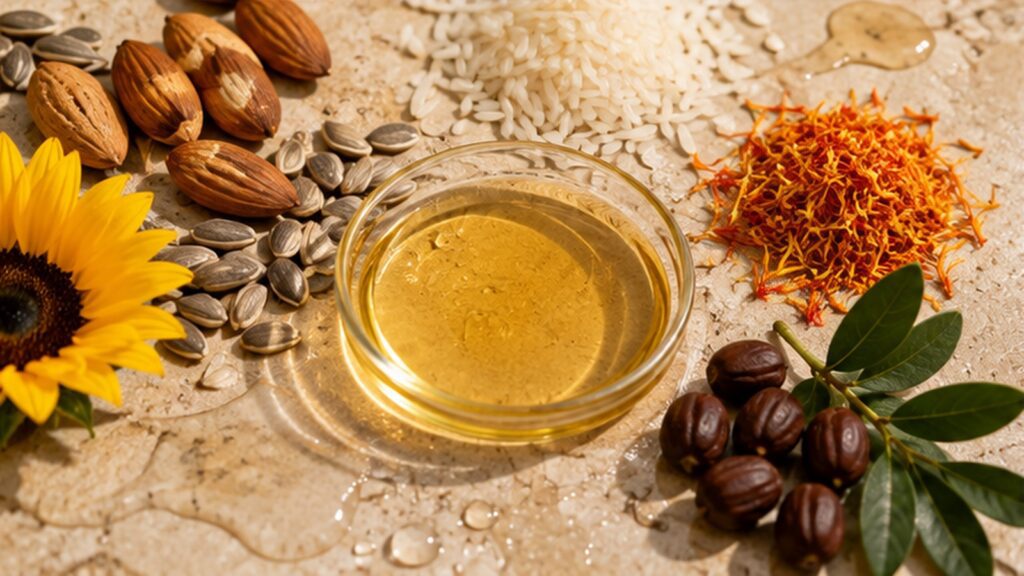
Pearls of Nature SatinSkin Shower Oil uses several plant oils instead of one single carrier. The formula includes sweet almond, rice bran, sunflower, safflower, and jojoba oils. It also includes coconut-derived octyldodecanol for additional slip and spreadability.
Sunflower and safflower oils are notable sources of linoleic acid. Research also shows that plant oils should not be treated as interchangeable.
A small adult study of topical sunflower seed oil found preserved barrier integrity and improved hydration. By contrast, olive oil performed differently in the same research. The study was small, so it should not become a universal product claim.
The useful lesson is straightforward. Choosing a blend involves more than selecting something merely because it comes from a plant.
For a deeper look at lipid composition, see essential fatty acids and ceramide synthesis in skin. That article expands the broader discussion around fatty acids and skin moisture.
The Skin Care Education library collects related guidance on oils and routines.
Satin Skin Shower Oil also includes aromatic essential oils. Citrus notes open the scent, while floral and earthy notes add warmth. That aroma is part of the experience, but it will not suit every person.
If your skin reacts easily to fragrance, choose carefully and patch test first. Persistent dryness, burning, cracking, or unexplained irritation deserves professional guidance.
How to Use Shower Oil Without Adding Another Complicated Step
The easiest method happens after cleansing. Finish your normal shower first, then step away from the direct water stream.
Apply a small amount of oil to wet skin. Massage it over arms, legs, shoulders, and other desired areas. Add more only where needed.
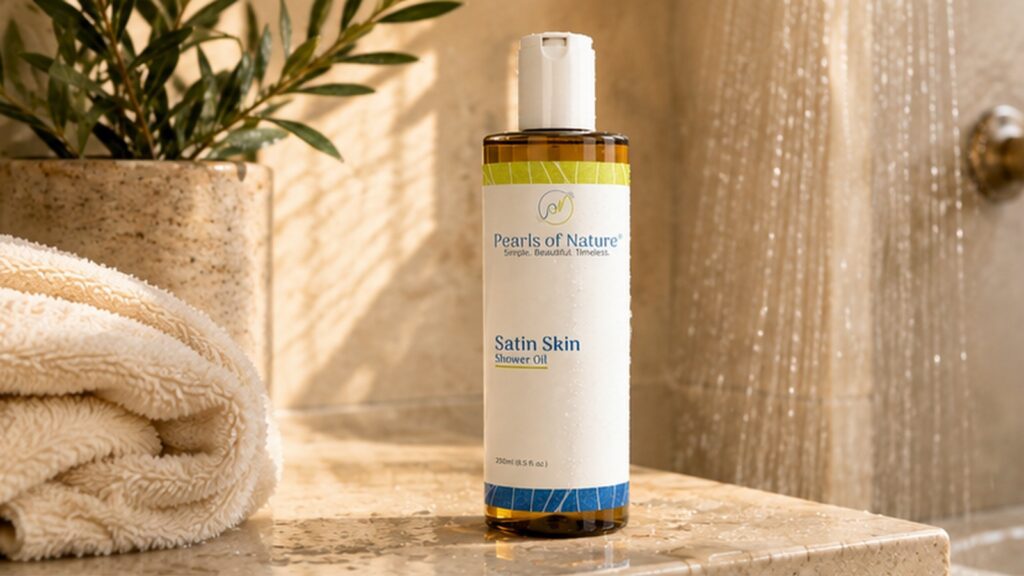
With Satin Skin Shower Oil, lightly rinse after application. Then pat your skin dry instead of rubbing vigorously. The product page recommends this sequence for its intended finish.
This keeps the moisturizing step inside the shower, where it may be easier to remember.
If you prefer applying moisture after bathing, that approach remains completely reasonable. Pearls of Nature Satin Skin Body Oil offers another route. It can be massaged over damp or dry skin after the shower.
Consistency matters more than loyalty to one format. Choose the method you will repeat comfortably.
The Safety Detail You Should Never Treat as Optional
Oil and smooth shower surfaces are an obvious combination for slipping. Therefore, use less product than you think you need at first.
Pearls of Nature specifically warns that Satin Skin Shower Oil can make the shower or tub floor slippery. Use care while entering, turning, and stepping out. Rinse the floor thoroughly after use.
Avoid the eyes, mucous membranes, broken skin, and freshly shaved skin. Patch test before the first broader application. Stop using the product if irritation develops.

A Modern Body-Care Ritual That Earns Its Place
The best shower oil benefits are not mysterious. You are combining damp skin, emollient oils, smooth spread, and gentler towel drying. Together, those details can create a softer, more polished after-shower feel.
That makes shower oil less about replacing lotion forever. Instead, it gives you another way to moisturize at a moment already built into your day.
For someone who enjoys botanical oils, shower oil benefits can include a simpler and more sensory daily ritual. Satin Skin Shower Oil brings that idea into one ready-to-use blend.
If this routine fits your preferences, start with a small amount and notice the finish. A simple ritual is most valuable when you actually look forward to using it.
Disclaimer: This content is intended for educational purposes and not as a substitute for professional medical advice.
