
Sub-Total: $0.00
Zechstein vs Dead Sea Magnesium Chloride: What Actually Differs?
A bottle of magnesium chloride can look remarkably simple. It may contain clear mineral brine, a spray or gel format, and little else. Yet the mineral inside may have traveled a very different path before reaching that bottle.
That history explains much of the interest in Zechstein vs Dead Sea magnesium chloride. One begins deep beneath northern Europe, while the other begins in the concentrated waters of the Dead Sea region. Their stories differ in geology, geography, processing, mineral composition, and commercial specifications.
Those differences can matter when choosing a topical mineral product. Still, one distinction deserves attention from the beginning. A better-documented source does not automatically mean better absorption through intact skin.
Understanding both ideas makes the comparison much more useful.
What Is Magnesium Chloride?
Before comparing two sources, it helps to understand what they share. Magnesium chloride is a mineral salt made from magnesium and chloride ions. In nature, it often occurs within concentrated underground or surface brines.
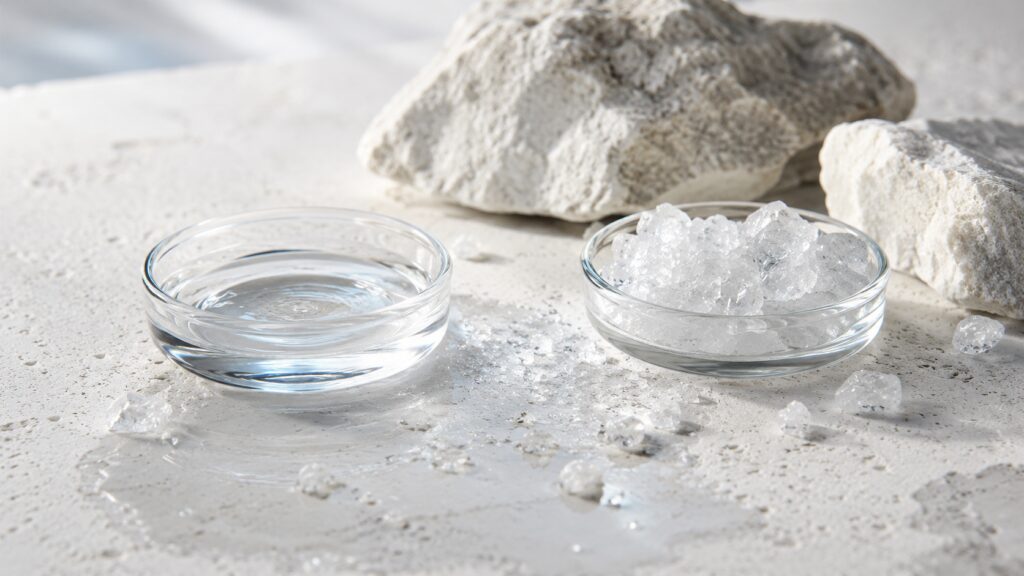
Magnesium chloride also attracts water readily. Manufacturers commonly offer it as liquid brine or hydrated magnesium chloride flakes. Topical products add another layer of variation because formulators may use brine directly or incorporate it into a gel.
That is why two magnesium chloride products can feel quite different on the skin. Concentration, added ingredients, and product format all affect the experience.
The familiar term “magnesium oil” can also cause confusion. Despite the name, magnesium oil contains no conventional oil. Instead, concentrated magnesium chloride brine creates a slippery texture that inspired the name.
Pearls of Nature® explains this distinction on its Zechstein Magnesium Oil – Pure Magnesium Chloride Spray page.
Once that basic chemistry is clear, the more interesting story becomes the mineral’s origin.
What Is Zechstein Magnesium Chloride?
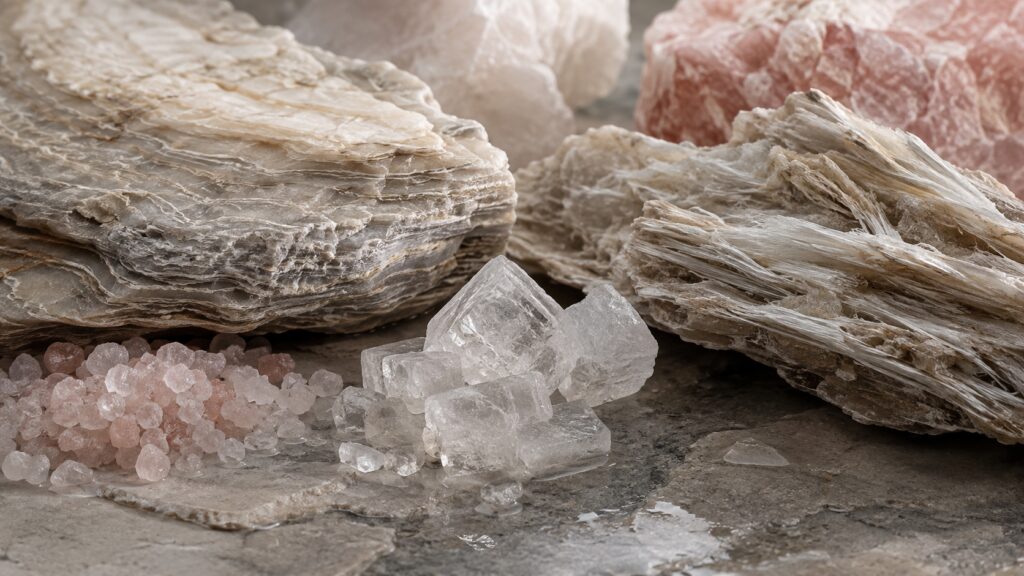
To understand Zechstein magnesium chloride, imagine traveling backward roughly 250 million years. During the Late Permian, a large inland sea covered parts of what is now northern Europe. Water repeatedly entered, evaporated, and left mineral-rich deposits behind.
Over time, younger geological layers buried those deposits deep underground. Today, the Dutch Zechstein geological record documents thick sequences of salt, anhydrite, carbonates, and other evaporite minerals.
Magnesium-rich minerals occur within portions of those underground formations. Commercial producers can recover magnesium chloride from bischofite-bearing layers associated with this ancient system.
Nedmag, for example, produces magnesium chloride from deposits connected with the former Zechstein Sea. Its Zechstein magnesium chloride production information describes both concentrated liquid solutions and magnesium chloride hexahydrate flakes.
That underground origin gives Zechstein magnesium chloride an appealing feature: clearly defined provenance. Consumers can connect the mineral to a documented geological system rather than a modern surface lake.
However, provenance tells only part of the story. The word “Zechstein” does not guarantee identical composition across every product. Concentration, purification, manufacturing, and finished formulation still matter.
Likewise, geological age does not prove superior biological performance. It does, however, provide a meaningful way to understand where the mineral began.
What Is Dead Sea Magnesium Chloride?
Now move from an ancient underground sea to a very different landscape. The Dead Sea sits within a dramatic desert basin between Jordan and Israel. Its waters contain exceptionally high concentrations of dissolved mineral salts, including magnesium.
Unlike buried Zechstein deposits, Dead Sea minerals begin in an exposed hypersaline water system. That difference sometimes encourages an overly simple conclusion. Marketing comparisons may portray underground material as pure and Dead Sea material as inherently contaminated.
The real situation is more nuanced. Commercial Dead Sea magnesium chloride does not simply move from shoreline water into a cosmetic bottle.
Producers concentrate and process the mineral-rich brine before creating commercial magnesium chloride materials. ICL describes solar evaporation followed by further processing for its Dead Sea magnesium chloride.
Its published Dead Sea magnesium chloride specifications also set measurable limits for other salts and trace contaminants. Therefore, Dead Sea origin does not automatically mean low purity.
A well-refined Dead Sea magnesium chloride can meet clearly defined commercial specifications. At the same time, it carries a different mineral story from Zechstein material.
That difference makes source comparison worthwhile, provided we compare measurable characteristics rather than marketing assumptions.
Zechstein vs Dead Sea Magnesium Chloride: What Actually Differs?
By this point, the strongest contrast becomes easier to see. Zechstein magnesium chloride begins within ancient underground evaporite deposits. Dead Sea magnesium chloride begins within a modern hypersaline surface brine.
Their production pathways differ as well. Zechstein producers recover magnesium-rich material from underground deposits, then purify or concentrate it by grade. Dead Sea producers begin with mineral-rich water and use evaporation, concentration, purification, and additional processing.
The table below summarizes those practical differences.
| Feature | Zechstein Magnesium Chloride | Dead Sea Magnesium Chloride |
|---|---|---|
| Geographic source | Underground deposits beneath northern Europe | Dead Sea brine region |
| Source type | Ancient subsurface evaporite deposits | Present-day hypersaline surface brine |
| Commercial processing | Recovery from bischofite-bearing deposits, followed by purification or concentration | Solar concentration, purification, and further processing |
| Commercial concentration | Can include concentrated liquid brine and magnesium chloride hexahydrate flakes | Can include concentrated brine and magnesium chloride hexahydrate flakes |
| Other minerals | Depends on deposit, grade, purification, and specification | Depends on brine, grade, purification, and specification |
| Purity judgment | Best evaluated through actual supplier or batch specifications | Best evaluated through actual supplier or batch specifications |
| Topical formats | Sprays, brines, gels, flakes, and other formulations | Sprays, brines, gels, flakes, baths, and other formulations |
| What source does not prove | Superior systemic skin absorption | Superior systemic skin absorption |
Concentration can vary with either source, and accompanying mineral profiles can differ as well. However, processing often influences the finished composition as much as geography does.
That leads to one especially useful question when comparing products: What are the actual specifications of the material inside the bottle?
That question tells us more than source reputation alone. A responsible comparison considers concentration, accompanying salts, contaminant limits, processing, consistency, and finished formulation.
In other words, Zechstein vs Dead Sea magnesium chloride should not become a contest between two place names. It should help consumers better understand what they are actually buying.
Does Mineral Source Affect Skin Absorption?
This is where source comparisons often take an unnecessary turn. An ancient underground origin may sound more pristine, and controlled specifications can represent genuine quality. Neither fact proves superior movement through the skin.
Current research does not establish meaningful systemic magnesium delivery through normal intact skin. Likewise, strong comparative human evidence does not show superior absorption from Zechstein magnesium chloride versus Dead Sea material.
A recent ex vivo study of magnesium permeation through skin adds useful context. Researchers observed minimal magnesium permeation through intact porcine skin. Permeation increased substantially after researchers disrupted the skin barrier.
The study used magnesium sulfate rather than magnesium chloride. Therefore, it cannot determine how either magnesium chloride source performs.
That distinction is important because source quality is not proven transdermal absorption. Likewise, purity does not demonstrate systemic bioavailability through intact skin.
For a deeper examination, see what current research says about topical magnesium absorption. That companion article addresses the absorption question directly.
Here, the more useful question remains why source still matters.
Why Does Magnesium Chloride Source Still Matter?
Source can matter without becoming a medical claim. For many people, provenance itself has value because it tells part of an ingredient’s history.
Someone may prefer knowing that a mineral came from a documented underground geological formation. Another person may appreciate the long association between mineral body care and the Dead Sea.
Neither preference requires a claim about systemic absorption.
Source can also influence the starting mineral profile. Natural brines contain more than magnesium chloride, including varying amounts of sodium, potassium, calcium, sulfate, and other minerals.
Processing then determines how much of that original profile remains in the commercial material. That is one reason purity specifications matter.
A useful specification can reveal magnesium chloride concentration, accompanying salts, trace elements, and contaminant limits. Consistency matters to formulators as well.
Reliable raw materials help manufacturers maintain texture, clarity, concentration, and sensory character across production batches. Therefore, source still has a legitimate place in product selection.
It tells part of the ingredient’s story. Processing and specifications tell the rest.
Which Magnesium Chloride Source Should You Choose?
Rather than asking which source is universally better, begin with a more practical question: What do you want from the finished product?
Look first at the ingredient list, then consider concentration, product format, sourcing transparency, and available quality information. These details usually tell you more than a dramatic source claim.
Application preference matters too. A fluid spray can cover larger areas quickly, while a gel stays where applied and works naturally with massage.
Skin feel also deserves consideration. Concentrated magnesium chloride can create a noticeable mineral sensation, and some people experience temporary tingling.
That feeling can be more noticeable after shaving or on sensitive skin. However, the sensation itself does not prove absorption.
Instead, it reflects the experience of applying a concentrated mineral preparation to the skin.
If documented Zechstein provenance appeals to you, a well-specified Zechstein product makes sense. If Dead Sea sourcing interests you, choose a reputable formula with equally clear specifications.
The strongest choice comes from understanding the whole product, not simply choosing one source name.
Where Pearls of Nature® Zechstein Magnesium Fits
Pearls of Nature® chose Zechstein magnesium chloride for its topical magnesium products. That choice fits naturally with our preference for straightforward formulations and clearly identified ingredients.
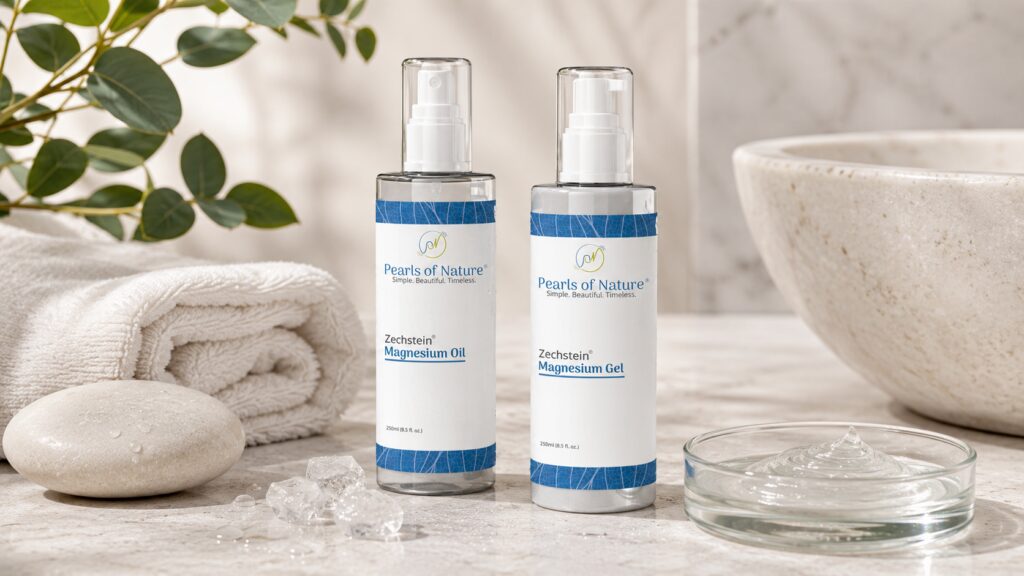
Our Zechstein Magnesium Oil – Pure Magnesium Chloride Spray combines water, Zechstein magnesium chloride, and naturally occurring trace minerals. The spray provides a simple way to apply mineral brine across larger areas.
Its lightweight format works easily within bathing, massage, stretching, or everyday body-care routines. For people who prefer more control, Zechstein Magnesium Gel – Topical Magnesium Chloride Gel offers a different experience.
The gel contains about 30% magnesium chloride within a simple gel format. Its thicker texture stays where applied and allows more deliberate massage.
Neither format needs a claim of systemic magnesium delivery to have a place in personal care. Some people simply enjoy concentrated mineral preparations, while others appreciate Zechstein provenance.
Others may choose between spray and gel based entirely on convenience and texture. You can explore both formats in the Pearls of Nature® Wellness collection.
Bottom Line
The story behind Zechstein vs Dead Sea magnesium chloride begins in two very different places. One source carries the geological history of an ancient sea buried beneath northern Europe. The other comes from the mineral-rich waters of a remarkable hypersaline lake in the modern Middle East.
Those origins create legitimate differences in provenance, processing, mineral composition, specifications, and product characteristics. They can also shape personal preferences and formulation choices.
What they cannot establish is superior systemic magnesium absorption through intact skin.
That separation matters because we can value mineral provenance without turning geology into a medical claim. We can value purity without assuming that purity guarantees greater bioavailability.
We can also choose a topical magnesium chloride product because its source, formulation, texture, and application fit our personal-care routine.
That is a more useful comparison, and ultimately, a more accurate one.
Disclaimer: This content is intended for educational purposes and not as a substitute for professional medical advice.
